

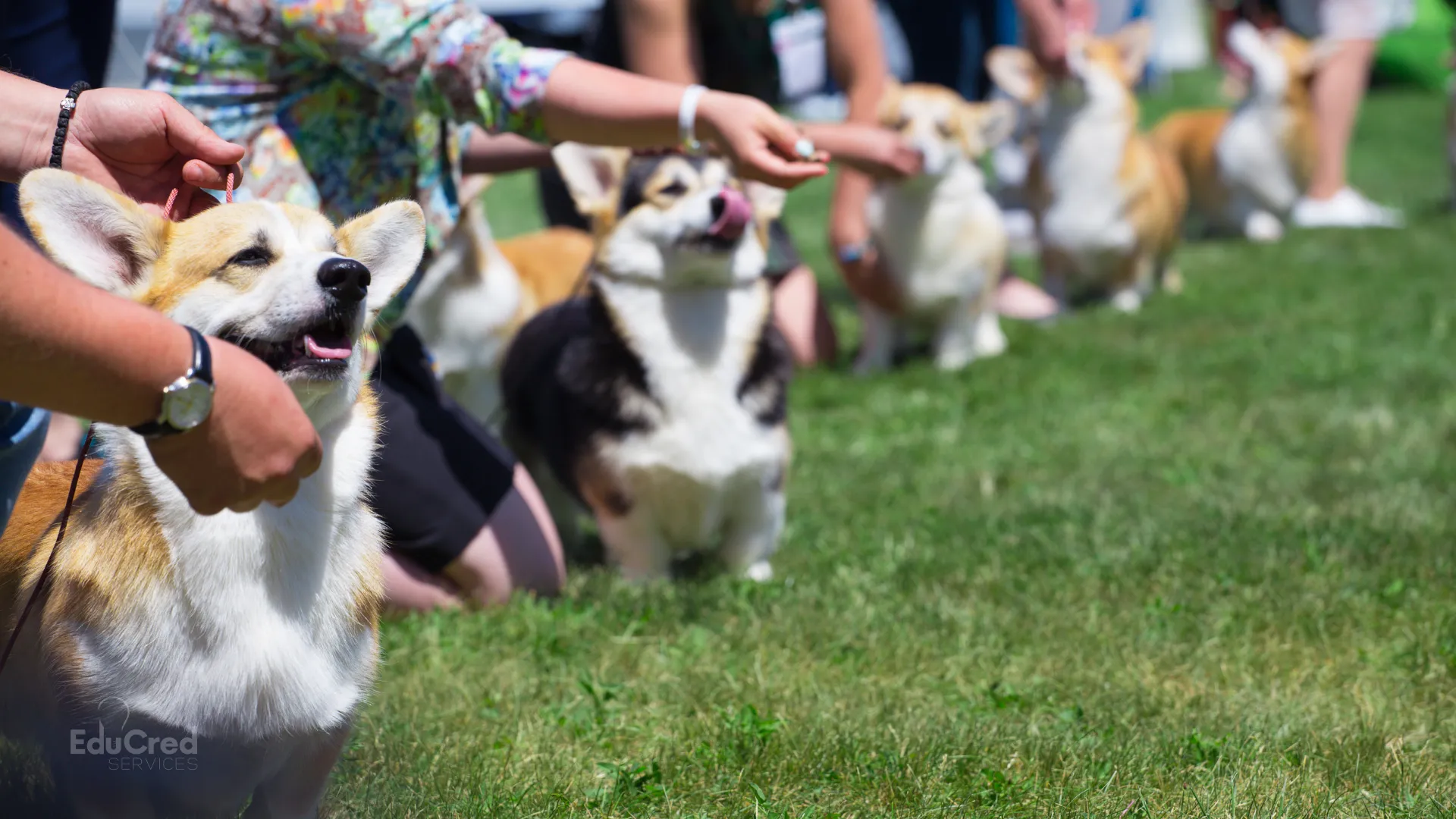
Every February, a few thousand impeccably groomed dogs trot around a ring in New York while the rest of us watch from the couch, next to a pug who has recently eaten part of a baseboard. The Westminster Kennel Club Dog Show is a spectacle, for sure. It is also one of the most rigorous evaluation processes in American public life, and if you have a Middle States Commission on Higher Education (MSCHE) site visit on the calendar, you are about to participate in a human version of a similar event. The same holds for any accreditation site visit, though MSCHE happens to be on my mind this week, since I am chairing one.
No serious breeder starts preparing a show dog the week before the show. The work starts before the puppy is even born: pedigree research, nutrition, socialization, conditioning, temperament, structure, hundreds of small decisions strung together over years. By the time the handler walks into Madison Square Garden, most of the outcome has already been determined. The ring is simply where the work becomes visible to someone else.
Your accreditation site visit works the same way. Those two or three days with the evaluation team are the ring. Everything that matters happened before the team arrived.
The Breed Matters: Your Mission and the Standards
At Westminster, every dog is measured against the standard of the breed, a detailed description of the best of that breed based on the tilt of the shoulder, the set of the head, color, size, and gait. Judges hold each competitor up against that written ideal rather than against the dog standing next to it, which is how a Pekingese and a Great Dane can compete in the same event without anyone having to settle the small-dog-versus-large-dog debate.
Accreditation also has its own set of standards, including mission and goals; ethics and integrity; the design and delivery of the student learning experience; support of the student experience; educational effectiveness assessment; planning, resources, and institutional improvement; and governance, leadership, and administration. When your campus prepares for its site visit, you should understand and apply these standards with the same care a breeder brings to a champion pup. Practically speaking, every piece of evidence in your self-study should connect to a specific standard and the criteria underneath it. Institutions tend to struggle when they treat the standards as a to-do list to satisfy during the writing year. The standards work much better as the framework you use to make decisions in the four, five, and six years before the writing year ever starts.
Pull the standards into a simple mapping document and ask a genuinely uncomfortable question for each criterion: what do we actually do here, and how can we prove it? The answers will tell you where you are strong, where you are guessing, and where you have a great practice that nobody has ever bothered to document.
Years of Conditioning: The Self-Study Process
Show dogs undergo continuous conditioning to achieve Best in Breed, including muscle tone, coat, and movement. Those attributes are the result of months of consistent training, not a crash course the week before the show. You can bathe a dog the night before, but you cannot build a topline in a weekend. In the same way, when your institution submits its self-study report to MSCHE before a visit, that report will (for better or worse) reflect sustained institutional practice and work over time.
An effective self-study process takes a year or more and rests on years of continuous improvement underneath it. Committees and workgroups gather information, interview colleagues across the campus, and draft narratives for each standard. The strongest reports come from institutions where assessment, planning, and governance are already ongoing habits, so the writing process becomes a matter of describing and organizing what already exists.
You can usually tell the difference in the first ten pages. A strong self-study is a consistent description of what happens at the institution on an ordinary day. A weak self-study reads like it was assembled in a conference room by people who were introducing themselves to each other for the first time.
As you prepare, treat the self-study as an opportunity to sort out which practices align with the standards and which don’t. Identifying a gap and pairing it with a measurable plan to close it demonstrates your commitment to continuous improvement. Every serious breeder can tell you exactly what their champion’s faults are and can also tell you what they plan to do about them in the next generation. When the pup doesn’t quite meet Best in Breed, knowing what can be changed, or planning for a good showing even with what can’t be changed, will produce the strongest result.
Handling and Presentation: The Visit Itself
A professional handler in the show ring knows how to best present the dog, how to move it at the right pace, and how to keep its attention so the judge sees the competitor in the best light. The handler is trusting years of breeding and training rather than improvising, which is what allows the dog to shine brightly in the ring.
A site visit is your institution’s opportunity to present itself to the judges. During the visit, the team will meet with the board, president, faculty, staff, and students. They will tour the facilities, review documents, and ask questions to confirm that the report accurately reflects the reality of campus life. Preparing for these interviews deserves as much attention as writing the self-study report did. Avoid surprises. Faculty and staff should be familiar with the standards, know which ones touch their own work, and be able to talk about their contributions in their own words.
Remember that the visiting team can tell the difference between an answer that describes something you do and one that was rehearsed to match what you think the team wants to hear, especially once the follow-up questions start. Just as judges notice when a handler is working too hard to hide a fault or a flaw in the dog, site visit teams notice when campus interviews feel artificial.
The run of show is also crucial, at Westminster and at your site visit alike. A well-organized visit gives the team a clear schedule, easy access to the requested documents, and a well-equipped workspace, so they can spend their energy on the substance of your institution instead of troubleshooting the conference room. Wellness breaks, hospitality, and comfort matter as much in the workroom as they do backstage at a show.
The Paperwork Behind the Ribbon: Documents and Evidence
Behind the scenes at Westminster, every contender has registration papers, health clearances, and titles on file, all of it organized whether a judge ever asks to see a single page. The documentation exists so that any question can be answered immediately.
Your Evidence Inventory serves the same purpose. Assessment findings, committee minutes, board minutes, policies, audited financial statements, strategic plans, prior team reports, and commission actions should be current, clearly labeled, and linked to the standards they support. Evidence that exists but cannot be located during the visit may as well not exist at all.
So, stress test the whole operation before the team arrives:
-
Can a staff member find minutes from a committee meeting held 14 months ago in under five minutes?
-
Can your IR director pull enrollment and retention trends disaggregated the way a team member is likely to ask?
-
Does the printer work? The HVAC? Are the restrooms stocked?
-
Will the president, board chair, and CFO be on campus, awake, and available that week?
-
Does anyone in dining, facilities, or housekeeping know a visit is happening?
-
Will faculty and students actually be around, or does your visit land during spring break?
-
Where is the team staying, who is picking them up, and who is feeding them?
A good handler arrives with the grooming table, the right lead, and a clear plan for where to be and when. None of that wins a ribbon on its own, and all of it protects the work that does. Small details are part of the package, and letting them slide will quietly shape the team’s impression of how your institution runs.
After the Ring: Outcomes and Improvements
One show tells a breeder what to work on before the next one: conditioning, grooming, handling, or occasionally the decision to leave a very good dog home and try again next season. Westminster is the biggest date on the calendar, and it is still a single point on a much longer timeline.
Your team report and commission action work the same way. Read them as feedback on institutional practice, then put them to work. Institutions that shelve recommendations until the next visiting team is scheduled create a familiar and entirely avoidable panic. Institutions that integrate team feedback into ongoing planning arrive at the next cycle stronger, calmer, and with a documented trail showing exactly what they did and why.
The Long Game
Champion show dogs and successfully accredited institutions are both built over years, through clear expectations, intentional decisions, practice aligned to standards, organized evidence, and a community that understands the work and gets to share in the win.
The site visit, like that lap around the ring, is where all of it pays off. Walk in knowing your standards, your evidence, and your people, and those few days become an opportunity to show what you have built rather than a test you hope to survive.
And if you would like a second set of eyes on the report, the evidence, or your team’s readiness before the judges arrive, that is what we do!