
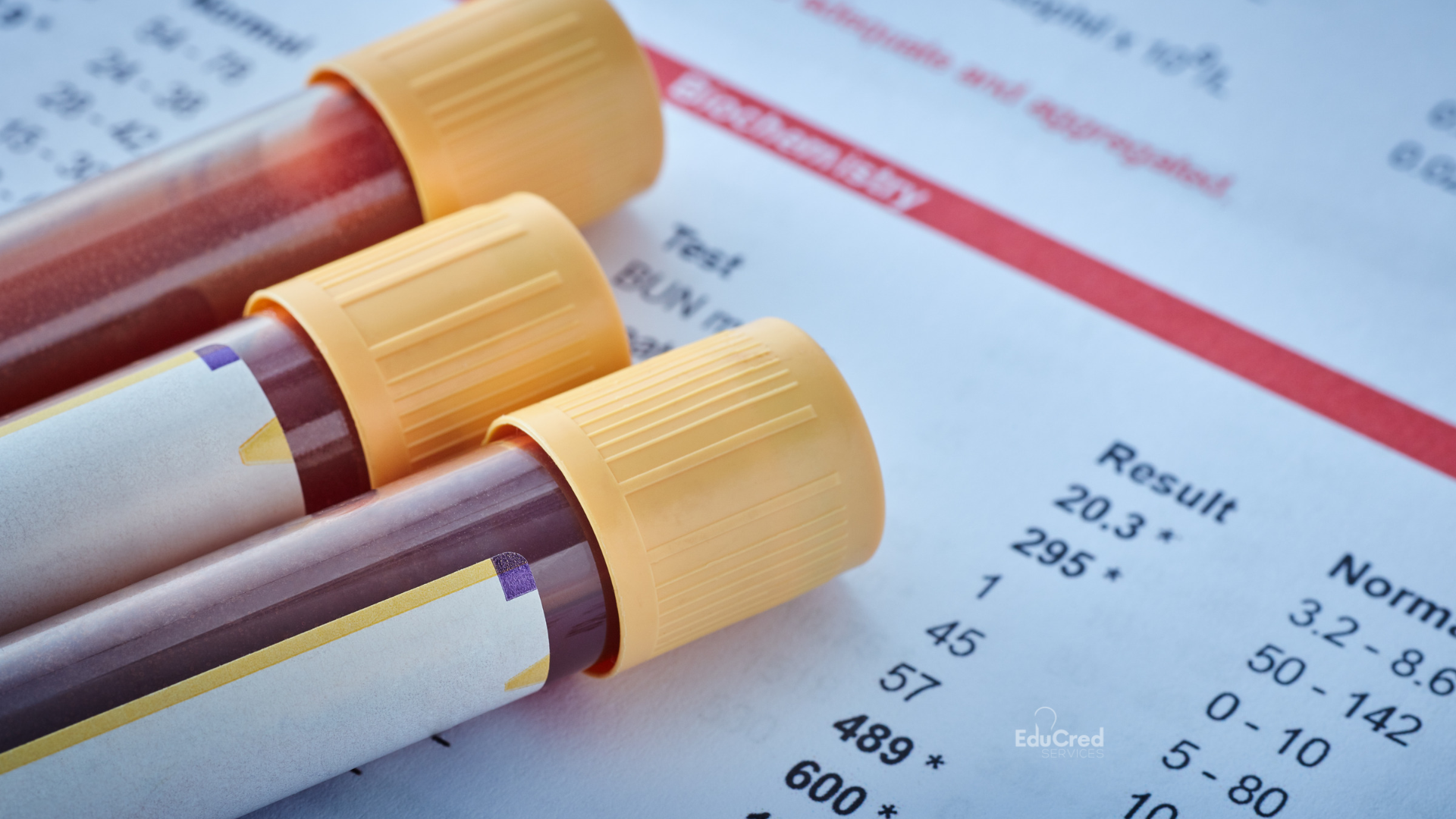
Elizabeth Holmes is back in the news and on the big screen. You Can See Everything, the new A24 documentary from Nathan Fielder and Lance Oppenheim, hit theaters on October 16, and it follows Holmes in the weeks before she reported to federal prison. If you’ve been around this blog for a minute, you may know that we never pass up the opportunity to use Theranos as a bold, flashing example of what not to do (we’ve written about this twice already: once about a company that had nothing but a mission, and once about whether you’re being scammed by your own statistics).
Today, we want to talk about the people who sat around the Theranos conference table and nodded along while the lab struggled to make the company’s signature blood-testing machine actually, you know, test blood. Keeping an organization honest (and its members out of prison) is, in theory, the entire reason a board exists. Theranos had one of the most impressive boards in the country, and it still missed a $9 billion problem happening a few floors below the boardroom. If your institution has a board or is about to form one, this is a cautionary tale worth a closer look.
The Most Impressive Board That Never Asked a Question
On paper (or LinkedIn), the Theranos board was impressive. Holmes recruited former Secretaries of State George Shultz and Henry Kissinger, former Secretary of Defense William Perry, and future Secretary of Defense Jim Mattis. These are people who negotiated with world superpowers for a living, but not one of them had meaningful experience in laboratory science or health care.
That gap, as it turned out, mattered a lot. In his analysis for the Idaho State Bar, compliance officer Brent T. Wilson explains that Holmes chose her directors for their connections and their ability to raise money, and he calls the result “window dressing.” These were the kind of men who had inside jokes with Margaret Thatcher and (I assume) a globe that swings open to reveal a couple of bottles of Scotch. But Theranos wasn’t in the business of Cold War diplomacy. If you asked any of them how a centrifuge worked, you’d probably only walk away with a glass of the good stuff (note: “good stuff” is wildly generous. Scotch is not my thing).
When the company’s CFO objected to faked demo results, Holmes fired him, and no one on the board asked where he went. In 2008, two senior employees brought the board chair evidence that Holmes had misled the board, and the board actually voted to remove her as CEO. However, Holmes talked them out of their decision, then fired both employees within two weeks. The board approved Sunny Balwani as president and COO, although he had no lab or medical background (and, as it turned out, was dating the CEO). Not a single health care venture capital firm ever invested in Theranos, and nobody on the board found that curious.
One of the people who eventually helped expose the fraud was a young lab employee named Tyler Shultz, George Shultz’s grandson. In a conversation with Santa Clara University’s Markkula Center, Shultz suggested that board members talk directly to the people “doing the pipetting.” Imagine how differently the story might have gone if one director had simply walked downstairs.
The Trophy Board Problem in Higher Ed
If they’re not careful, higher ed institutions can easily end up with their own versions of the Theranos board, especially in the start-up phase. A founder writes a wish list of the most impressive people they can reach through their network: a celebrity chef with three cooking shows, a tech billionaire who just bought a soccer team, a retired pro golfer, and a pop star who once posted a photo on a yacht. Everyone says yes, because the time commitment sounds light and the letterhead looks spiffy. But when push comes to shove, can the celebrity chef, tech billionaire, pro golfer, and pop star really provide meaningful context or insight into an institution focused on offering Doctor of Physical Therapy degrees?
Look friends, I’m not here to tell you that you can’t have a movie star on your board. A high-profile board opens doors and looks fantastic on the About page. It probably attracts investor attention and money. A board that agrees with everything you say is also extremely convenient. Meetings are short, and nobody asks why the enrollment projections doubled between the second and third drafts of the budget. No follow-up questions; no trouble.
But trouble, like strep throat at your kid’s elementary school, cannot be avoided, only delayed.
For our hypothetical DPT school, trouble might show up when the first cohort is a year away from clinical rotations, and nobody has signed agreements with enough clinics for placements. It might show up when a prospective student asks whether graduates can sit for the national licensure exam, and nobody on the board knows that the answer depends on programmatic accreditation by CAPTE, the agency that accredits physical therapy programs. Or it might show up in the budget, when the cost of hiring licensed PT faculty turns out to be twice what the founder estimated. A board with even one physical therapist or experienced academic administrator would have asked about each of these potential issues early on. The chef, the billionaire, the golfer, and the pop star had no reason to know these challenges existed, just as Kissinger and Shultz had no reason to know what a lab needs to run a reliable blood test.
What a Good Board Does (and What the Theranos Board Didn’t)
A board is supposed to be the group of people who can look the CEO in the eye and say, “Explain this.” Here’s what that looks like when it works, and what it looked like at Theranos when it didn’t.
It knows enough to ask the right questions.
A good board, taken as a whole, understands the business it oversees. At Theranos, the directors could negotiate a nuclear arms treaty, but no one could have told you what a lab needs to run a reliable blood test. Professor Les Alexander’s business case argues that the board’s lack of relevant expertise meant it couldn’t even recognize which questions to ask. For a college, that means someone at the table who understands academic quality, someone who can read an audited financial statement, and someone who knows the regulatory landscape. Those can be three people or one very busy person, but the knowledge needs to be in the room somewhere.
It keeps a clear line between running the place and overseeing it.
The board typically hires the chief executive, evaluates their performance, and has the authority to replace them. Theranos’s board actually voted to remove Holmes in 2008, and she talked them out of it before the meeting was over. She was also the chair of the board, and thanks to shares that carried 100 votes apiece, she essentially controlled who got to sit on it. Plenty of higher education institutions, especially young ones, have a founder who serves as both president and board chair, and that arrangement can work, but it gets risky when the founder would rather hear applause than pushback, or when most of the board owes its seats to the founder and feels it can’t disagree. Alexander describes the ideal as a board that supports the CEO while also holding them accountable, and both halves of that matter. Professor Alexander describes how it supports the CEO, and it holds the CEO accountable. A founder who wants a board that can do the second part is usually a founder whose institution is in good shape.
It watches for conflicts of interest.
The Theranos board approved Sunny Balwani as president and COO without asking much about his qualifications, and, apparently, never found out he was dating the CEO. A good board has a written conflict-of-interest policy, collects disclosures every year, and includes enough members with no financial or personal ties to leadership. If your board roster includes the founder’s spouse and the founder’s college roommate, that’s worth a second look, even if both of them are delightful at dinner parties.
It actually goes downstairs and looks around.
Tyler Shultz’s advice was for board members to talk to the people “doing the pipetting,” and it’s one of the best pieces of governance advice in this whole story. Board members at higher ed institutions should sit in on a class now and then, maybe meet with the registrar, and hear directly from students. Directors who have seen the operation up close ask much better questions about it, and they’re much harder to fool with a slick slide deck.
It reads the numbers like a skeptic.
Theranos reached a $9 billion valuation without a single health care venture capital firm investing, which is a bit like a restaurant getting rave reviews from everyone except food critics. A good board notices when the experts stay away and asks why. In higher ed, this could look like an enrollment projection that jumps from 40 students to 300 in one year, or a revenue forecast that only works if every single prospective student enrolls. Someone on the board should explore where those numbers came from, and they should feel comfortable asking.
It protects the people who raise concerns.
At Theranos, the CFO who objected to the faked demo results was fired. The two employees who brought evidence to the board chair were gone within two weeks. The one director who pushed back was eventually shown the door. A good board makes dissent part of the job description and pays attention when an employee or faculty member flags a problem. If the people closest to the work learn that speaking up gets them fired, the board will only hear good news, right up until the news gets very bad.
It wants objective information.
Nearly everything the Theranos board knew about the lab came from Holmes and Balwani, and nobody outside that circle was ever asked to confirm it. A board with healthcare expertise would have asked for independent validation of the technology, regular reports straight from the lab director, and copies of anything regulators sent the company. Instead, the board found out how bad things were around the same time the rest of us did, through the Wall Street Journal and a federal inspection that put patients in “immediate jeopardy.”
In higher ed, this kind of information can come from a lot of places: institutional effectiveness reviews, accreditation site visit findings, advisory council feedback, student and alumni surveys, and input from your friendly neighborhood higher ed consultants (hi!). At many institutions, these reports stop at the administration, and the board hears a summary (usually an upbeat one) at the next meeting. An effective board looks at the findings themselves, asks what’s being done about them, and checks back later to see whether it worked. If students rated advising a 2 out of 5 last spring, the board should hear that number and the plan to fix it. A president with nothing to hide will welcome that kind of attention, and the institution will be better for it.
Back to the Boardroom
The documentary is called You Can See Everything, which is ironic, because the Theranos board saw remarkably little. Its members had decades of public service and, again, I assume, excellent Scotch, but neither of those helped them recognize a lab that didn’t work. Not one of them walked downstairs, and when it counted, nobody looked Holmes in the eye and said, “Explain this.”
Your board can do better, and most of what it takes comes down to two habits: putting people at the table who understand what your institution actually does and giving them real information to work with. The payoff is a board that catches problems while there’s still time to fix them, before they show up in a site visit report or, worse, a documentary.
So, keep the celebrity chef if you can get him. Just make sure someone at the table would notice if the blood test stopped working. And if you’d like a friendly outside look at your board (no black turtlenecks required), we’re happy to help.