
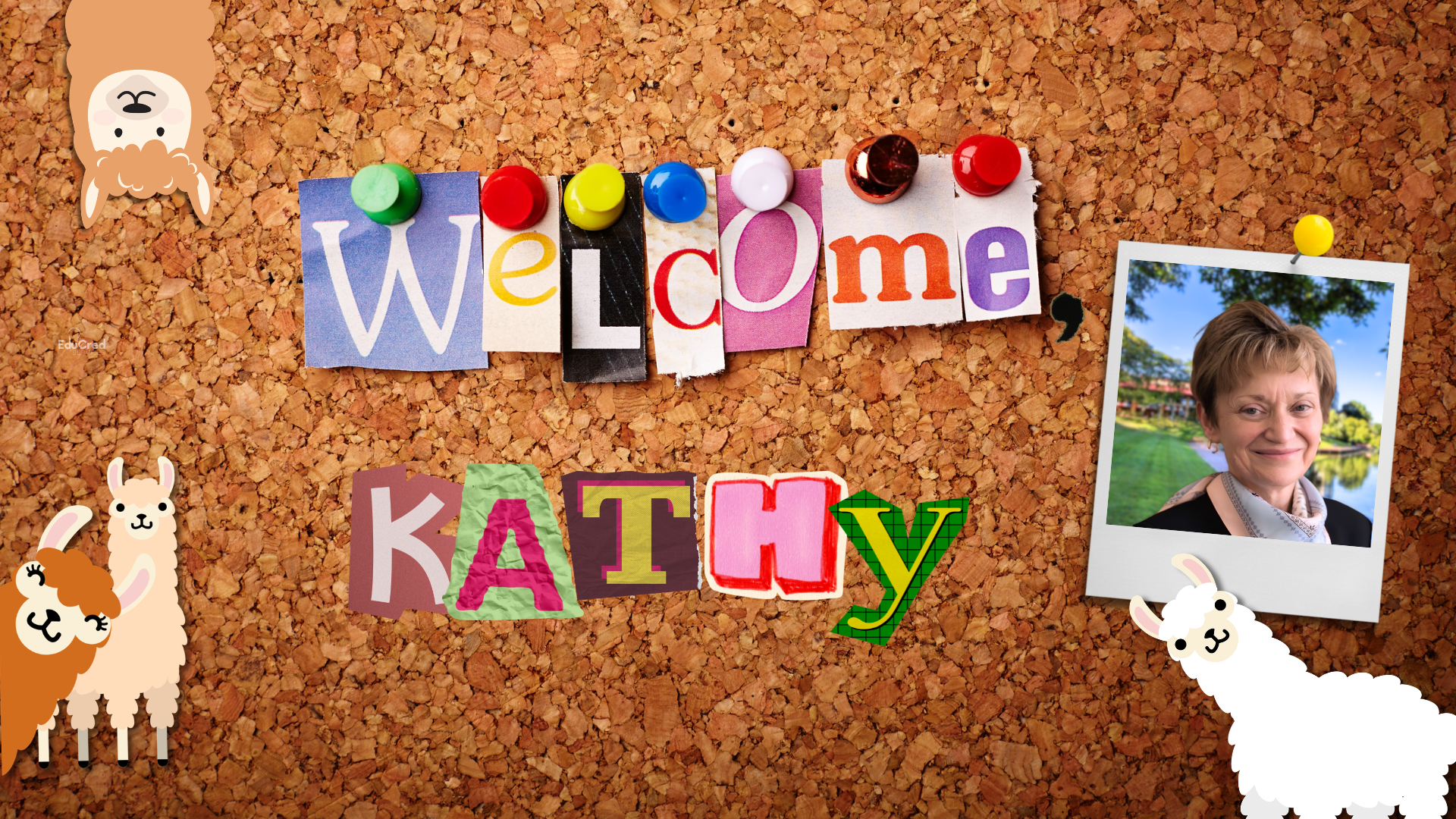
This week, we’re thrilled to introduce the newest member of the EduCred Services Team, Kathy Doherty, Ed.D. With more than two decades in higher education, Kathy has done just about all of it. She’s led program growth and institutional effectiveness work, served as Dean of the School of Education at Notre Dame of Maryland University and Associate Provost at Goucher College, guided strategic enrollment for more than 25 graduate programs, and evaluated large federal grant programs for the U.S. Departments of Education and Homeland Security. Kathy has also spent seventeen years as a Middle States Commission on Higher Education (MSCHE) accreditation examiner and appeals panel member. So, when she says she genuinely loves accreditation (and chairing a campus self-study in particular), she isn’t being facetious. She’s been on both sides of the process, and she still enjoys the work. When she isn’t making institutions better (or keeping up with four kids and two dogs in Columbia, MD), you’ll find her out walking, practicing Tai Chi, or working through an ever-growing audiobook queue. Please join us in welcoming Kathy, and read about why a self-study might just be the best thing your campus does for itself.
No Condolences Necessary
A few years back, I was talking to a colleague in the faculty lounge and mentioned that our campus president had tapped me to chair the self-study process. I watched her face morph from a quick laugh to honest signs of deep pity with verbal offers of condolence. As I tried to reassure her that I was delighted to accept the assignment and, in fact, couldn’t wait to get started, I could tell that she didn’t believe me as she hurried off to class with a quick “I guess when the president calls, you answer.”
I understand the reaction. Higher ed folks hear the word “accreditation” and back off quickly. For most people I worked with, self-study was something you did willingly in the therapist’s office, but otherwise fell in the “root canal” or “new transmission for your car” category as something to avoid whenever possible.
It doesn’t have to be that way. The truth is that a self-study is one of the highest-value activities a campus can do for itself, and leading it on campus can be genuinely satisfying work. As a self-study chair, I can ask hard questions about the place I care about, find the truth in people I see every day, and help my campus grow stronger than it was before the self-study started. That’s what the whole job is about: learning and growing. What’s not to love? It feels like a gift!
If you have just been handed this assignment, are already knee deep in one, or feel one coming your way, here’s a hand to hold and some advice from what I’ve learned.
Start with the Standards, Not the Story
Read the standards first. Then read them again. Print them out, hang them on your wall and write all over them. Highlight important parts. Underline where words are unclear. Eventually, the self-study will grow into a story about the institution, but that story must first fit the framework provided by the accreditor. Skip this step and you’ll end up with a beautiful story that never answers the questions on the page.
When I was leading a self-study, I kept the standards on my desk, on my laptop, and in my carry-home bag. Every statement someone made, every paragraph a work team wrote, and any evidence that was turned up eventually pointed back to a specific standard or requirement. It made it easy to sift through the tidal wave of information; if I can’t connect to a standard, then what I’ve collected doesn’t go into the document.
Build the Team Before You Build the Timeline
Think carefully about this step. Select people who care about the institution, and who aren’t afraid to say what’s not working right. You want a good mix of people representing the campus community: the finance person who reads the fine print, a faculty member who teaches across departments, a student support services director with institutional memory. You want the good and the bad, and an institutional research person who can pull data the first time you ask. Avoid asking anyone who you know won’t work hard, doesn’t take the process seriously, or sees it as a way to earn points.
Being a campus insider gives you an advantage when picking the team. You know who does the work, who will show up to optional meetings, and who will return an email on Friday afternoon. Use that to build the strongest team possible. The organizational chart will tell you which role should fill the slot, but your instincts will tell you who that person should be. And don’t shy away from skeptics, from someone who’s pushed back, asked why, or refused to let an unsupported claim ride. Every team needs that person. Chances are, you know who will play that role perfectly.
Treat Evidence like the Air you Breathe
Never forget that every claim, statement, or narrative needs proof, like policies, meeting minutes, dashboards, syllabi, assessment reports, board resolutions, course evaluations, and professional development logs. Set up a shared drive on the very first day, intentionally name your folders to systematically align with the standards, and require evidence uploads with every draft a work group submits. If you wait until the week before the submission is due, chances are your hard work to date will never pay off.
Build your evidence inventory as you go along. You don’t need fancy software. A simple spreadsheet works fine. Set it up by standard, substandard, claim, document name, location, person responsible, and date verified. It feels tedious, but by month six into the process, it may be the most valuable document in the entire project.
Write Honestly about What’s Not Working
Truthfulness and airing dirty laundry are often the parts that most people struggle with when engaging in a self-study. It shouldn’t be. Accreditors don’t expect perfection. They look for self-awareness, a plan, and evidence that the plan can be completed or implemented. An honest self-study with identified gaps and a realistic improvement plan beats a pretty one that pretends all is fine. Reviewers know what to look for and can tell the difference between reality and fluff.
Harder than honesty, the demands of campus politics are often the most challenging. The self-study is about the campus community and everyone in it. You are writing about colleagues. You’re identifying gaps in programs run by peers and friends. Don’t be tempted to soften the narrative, to skirt the corners, or to use passive voice. A team that writes “we identified weak assessment practices in two programs and built a two-year plan to address them” is in a much stronger position than the team that writes “assessment is robust across all programs” and assumes the reviewer won’t look any further.
Write to People, Not a Committee
In general, I always read my drafts aloud. This is especially helpful for the self-study document. If it reads like a procurement contract, rewrite it. You are telling a story about your institution. Short sentences, plain verbs and real-life examples are techniques to aim for. Your review team has read dozens of self-study reports; make yours memorable. The clearest narrative is the winner.
Avoid higher education jargon in the report that always sneaks in when you are not paying attention. Words like “robust,” “leverage,” “stakeholder engagement,” and “intentionality” are fillers and add little value. Replace these catch words with specifics. Write about programs that review their learning outcomes every year and revise curriculum based on these results, cite the data. Or the student affairs director who uses feedback from a student survey to plan and launch a new study group for international students. One sentence can often do the job of three.
Protect the Process
Block out time for self-study work as if it’s carved in granite. Self-studies flop when they take second place to daily distractions. Standing meetings, written agendas, public deadlines, and visible progress keep the work front and center. Consistency beats last-minute panic sessions every time. Everyone knows you have a day job that doesn’t go away, so be honest with your supervisor or colleagues about what’s got to take a back seat (hint: it shouldn’t be the self-study).
Prepare for the Site Visit like it’s a Conversation
Once the visiting team is on campus, the self-study is no longer the point of focus. The story of your campus is. Update your campus community on what to expect. Encourage honest, not rehearsed, answers. A faculty member who says, “assessment has been a challenge, but this is what we’ve been doing,” gives the examiners a better sense of the commitment than one who recites bullet points.
Remember that you are the bridge between the visiting team and your campus, a crosswalk that runs in both directions. The reviewers will relate to you because you’ve done the work and are prepared. Your colleagues will depend on you because you’ve been the one always showing up during the process. Use these relationships to set a positive tone: we are all talking and exploring and learning.
Celebrate the Results
When the team finds something good, name it. When they find something broken, thank them. A self-study is the chance for true peer review and collegial exchange. It’s an opportunity to look at ourselves in a mirror and receive positive and negative feedback, so own it. The most value from this process comes in the form of improvement and growth. Changes in a strategic plan, more investment in programs, or more efficiencies that improve the quality of the campus experience. The self-study document goes in a binder. The findings initiate change. And, as someone invested in the institution, you’ll be there to celebrate that change.
Why I Keep Coming Back to This Work
Chairing a self-study from the inside means sitting at the table where a campus gets real, where honesty prevails, and where opportunities for improvement emerge. I learned more about how the place worked, engaged with faculty and staff who have been fixing problems for decades, and discovered policies written in 1980 and not revisited since. This is not a compliance exercise. It’s about the work we do every day across every campus. So, yes. I loved this work, and I love that I can continue to engage in it from a different perspective while relying on my years of experience. It’s hard and tedious, but it placed my campus in a better position than before we started. What more can we really ask about this work that, in the end, provides a better learning experience for all students?