
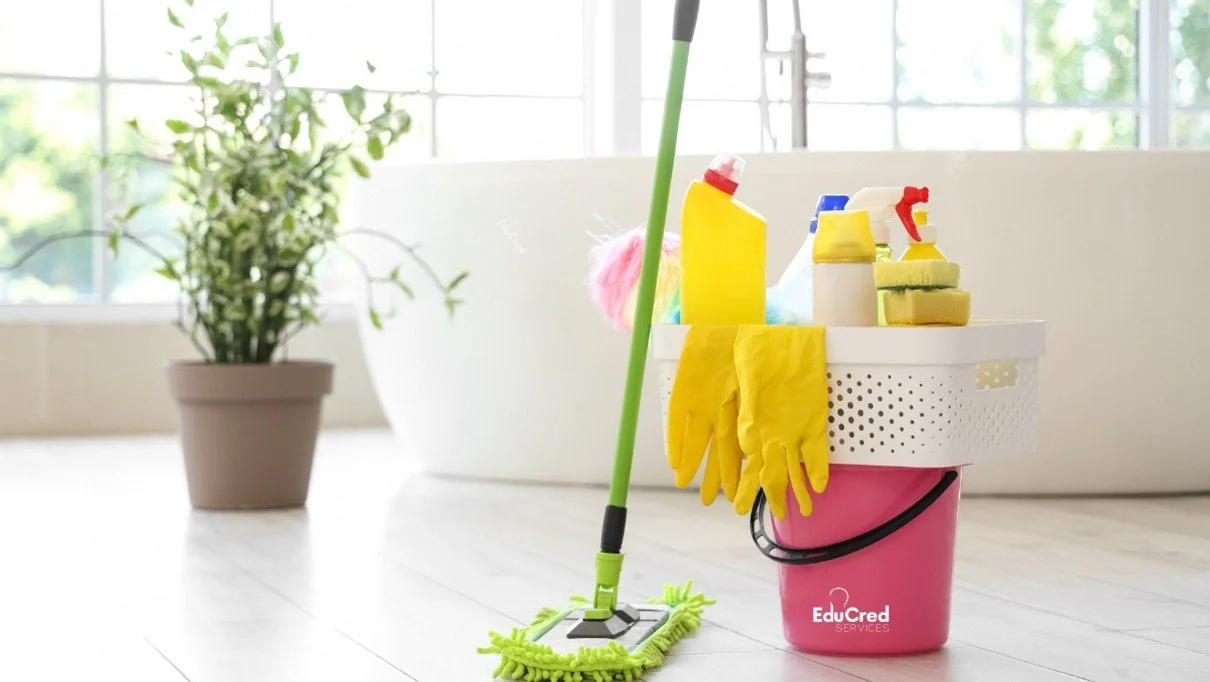
Ok, I know it’s not spring yet. But it’s coming. And if you, like our team, live in the frigid climes of the northern United States, you might be more than ready to embrace a spring-themed blog. We’ve earned it. The sidewalks are salted, the windshield scrapers are getting a workout, and the sun sets at what can only be described as an emotionally hostile hour. So, let’s defy the groundhog, and skip ahead (mentally, at least) and talk about spring cleaning. Not the kind where you reorganize your garage and find rollerblades from 2007 (though, honestly, I can think of worse things), the institutional kind. Dusting off documents, auditing files, checking equipment, and making sure that what your institution says it’s doing actually reflects what it’s doing.
Many institutions don’t set aside dedicated time for a full documentation and operations check-up (no shade, but we’ve seen a lot of outdated academic calendars lately). Things usually get updated reactively. Someone notices a broken link, a state agency flags an outdated policy, or an evaluator asks a question no one can answer. But reactive maintenance is how you end up with an academic catalog that references a dean who left two years ago and a student handbook that contradicts your syllabus. A little proactive attention goes a long way, and late winter (which, again, we’re rebranding as Early Spring) is a great time to do it before the end-of-semester chaos kicks in and everyone’s bandwidth evaporates.
So, here are four areas worth putting on your spring cleaning list this year.
Administrative and Student File Audits
If your filing system (digital or physical) hasn’t been audited in a while, now’s the time. Administrative and student records are the backbone of your compliance documentation, and when they’re disorganized, incomplete, or inconsistent, it shows, usually at the worst possible moment.
Start with student files. Are applications signed and dated? Are financial records complete? Are academic transcripts where they should be? If your institution uses a document management system, great! But keep in mind that systems are only as consistent as the people using them. A system that allows uploads doesn’t guarantee that the right documents were actually uploaded. Audit a sample of files from your most recent cohort and confirm what’s there and what’s missing.
On the administrative side, pull out your personnel files. Are faculty credentials documented? Are professional development records up to date? Do you have current, signed job descriptions for every role? This is especially important if you’ve had any staff turnover since your last accreditation review. New hires sometimes slip through without the same level of documentation rigor that existed when everything was being assembled for a self-study. Was your new instructor going to get their official transcript to you by the end of last year? Did it happen?
This isn’t just an accreditation exercise, either. Good file hygiene protects your institution in the event of audits, complaints, legal inquiries, or state reviews. And it’s a lot less stressful to organize 50 files now than to reconstruct them from memory under a deadline later. If you find gaps, document them and create a plan to close them. If you find that your filing process itself is the problem (inconsistent naming conventions, unclear ownership, no standard checklist for what a complete file looks like) fix the process first. Otherwise, you’ll be doing this exact same cleanup again next year.
Facilities and Emergency Preparedness
This should already be part of your ongoing Facilities Plan, but a spring check-in is a good excuse to make sure nothing has quietly fallen through the cracks. Because the worst time to find out your fire extinguishers are expired is when your office is on fire.
Walk through your facilities (or, for online institutions, your contingency and continuity plans) and ask the uncomfortable questions. Are your fire extinguishers inspected and current? Is your emergency action plan posted and accessible? Do your employees actually know what to do in an emergency, or is the plan sitting in a binder that nobody has opened since orientation? Have your emergency contact lists been updated to reflect current personnel? If you have a physical campus, are exit routes clearly marked and unobstructed, or has someone gradually turned the emergency exit hallway into overflow storage for folding chairs?
For institutions that operate primarily online, spring cleaning your facilities plan looks different but is equally important. Do you have a documented business continuity plan? If your LMS goes down, what’s the protocol? If a data breach occurs, who is responsible for notification and response? Are your cybersecurity policies current and your software systems patched? These are the kinds of questions that accreditors and state agencies increasingly want answered, and “we haven’t had a problem yet” is not a plan.
Review your Clery Act obligations (if applicable), check on any required safety training, and make sure your institution is both compliant on paper and prepared in practice. A facilities plan that hasn’t been tested or reviewed since it was written is a very specific kind of fiction.
Website & Public Facing Materials
I talked about this in our last blog post, but it bears repeating in the context of a spring cleaning checklist: your website is one of the first things prospective students, accreditors, state agencies, and partners look at. And if what they find there is outdated, inconsistent, or just plain wrong, it creates a credibility problem that no amount of internal documentation can fix.
We’re not even talking about the big stuff right now (though, shameless plug for last week’s post, our previous blog covered that thoroughly). We’re talking about the small things that accumulate over time and quietly make your institution look like it isn’t paying attention. Staff bios for people who no longer work there. Program pages that list old tuition rates. A “News” section where the most recent post is from 18 months ago. A footer that still says © 2023. Links that go nowhere. A calendar of events that ended last semester.
These aren’t catastrophic on their own, but collectively, they send a message: nobody’s minding the store. And if an evaluator pulls up your website during a review and finds information that doesn’t match what’s in your self-study, that’s a conversation you don’t want to have.
Add a full website sweep to your spring cleaning list. Click every link. Read every page. Compare what’s on the site to what’s in your current catalog and handbook. If you’ve made programmatic changes, tuition adjustments, or leadership transitions since the last time your website was updated, fix it now. And if your institution doesn’t have a clear process for who updates the website and how often, that’s a gap worth closing before it becomes someone else’s finding.
Version Control (Across the Board)
While you’re already looking at your website, take a broader look at version control across your institution. This is one of those invisible problems that doesn’t seem urgent until it is.
Start with your academic calendar. Is the one posted on your website the current one? Or is it last year’s, and nobody noticed because the dates were close enough? We’ve seen this happen more than once, and it’s the kind of error that’s easy to prevent and embarrassing to explain.
Then look at your policies and key documents. If your institution has multiple versions of the same document floating around (on the website, in the LMS, in a shared drive, in a printed binder in the conference room), how do you know which one is current? Is there a single source of truth, or are people referencing different versions depending on where they happen to look first? This is how contradictions sneak into your documentation. Someone updates the refund policy in the catalog but forgets to update it on the website. Someone revises the student complaint procedure in the handbook, but the version in the LMS is still the old one. No one notices until an evaluator (or, worse, a student) finds the discrepancy.
The best move here is to stop maintaining multiple copies of the same document in multiple places. Pick one canonical location for each key document, be it your website, your LMS, your shared drive, or wherever makes the most sense, and make that the single source of truth. Everywhere else should link to it, not host its own copy. That way, when the complaint policy gets updated, it gets updated once, and everyone who needs it is already looking at the right version. If your institution uses SharePoint, Google Drive, or a similar platform, you likely already have built-in version history; use it! And if a document absolutely must live in more than one place (it happens), assign one person the job of keeping those copies in sync, because, as anyone who has ever used a communal break room refrigerator will tell you, if it’s everyone’s job, it’s no one’s job.
The Point of All This
These aren’t tasks that get neglected because people are lazy or don’t care. They get missed because they’re ongoing, largely invisible, and don’t seem urgent until there’s a problem. That’s exactly why a dedicated spring cleaning push is worth doing. It gives your team a reason to pause, look around, and focus on the stuff that normally gets drowned out by the day-to-day. Make it a shared effort. Spring cleaning looks different for the Registrar than it does for HR, and different again for your IT team or your Academic Dean, but everyone’s doing it together, and that matters. Challenge your departments to find the oldest policy still in circulation. Turn the version control audit into a scavenger hunt. Give people permission to flag things that look wrong without it feeling like a complaint. When this kind of work becomes a team priority instead of a solo chore, it actually gets done—and people tend to find more than you expected them to.
So, yes, spring is still technically a few weeks away, but the work of keeping your institution’s house in order doesn’t have to wait for warmer weather. Start now, while there’s still time to find and fix the small things before they become big things. And if you open a closet and the whole mess comes tumbling out, don’t panic. That’s what we’re here for, so reach out, we’d love to hear from you.